The sea as a source of wealth and belonging
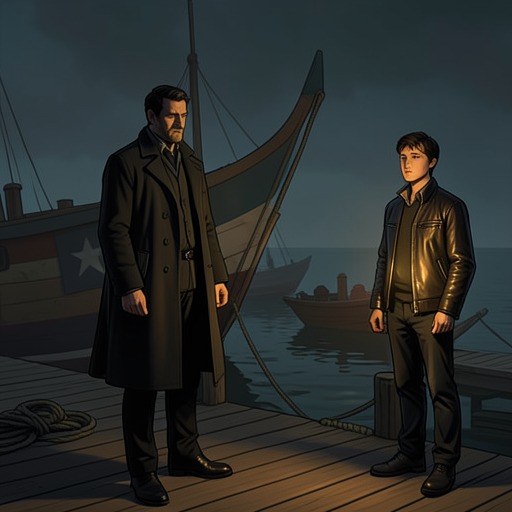
The Florios of SicilyThe sea as a source of wealth and belonging is a recurring idea that binds Sicily’s natural environment to commerce, labor, and family identity. It provides the catch and conditions on which the tuna industry and coastal wine trade depend, but it also offers a language for imagining home: when Ignazio first sees Favignana, the island’s sea makes him want to belong to it as both master and child. This doubleness—resource and attachment—gives the sea a role beyond setting, linking the Florios’ economic rise to the landscape from which it comes.
The Sea’s Seasonal Order
The novel presents tuna fishing as an old, organized encounter between marine life and human work. Tuna travel in large shoals from the Atlantic into the Mediterranean in spring, when conditions are mild and the fish are ready to reproduce. The fishery’s nets are lowered to meet this seasonal movement; the catch depends not on an abstract market but on the recurring passage of living animals through particular waters.
The tonnara is more than a building or processing site. Its connected chambers of nets, a method associated with Arab invention and later Spanish transmission, make it an apparatus for directing the catch. The system also structures time and communal labor. Families have lived around the fisheries for centuries: men work at sea, women in the processing plants, winter is spent maintaining boats and repairing nets, and spring and summer bring the catch and its processing. The seasonal cycle thus joins ecology, technology, and household life.
The tuna’s value extends through nearly every part of the animal. Its meat is processed, salted, and sold in large barrels; skin and bones are dried, powdered, and used as fertilizer; fat becomes lamp fuel; and eggs are made into costly roe. The fish is known as the sea pig because little is discarded. This comprehensive use makes the catch a source of many products and livelihoods, while showing how the community’s work is organized around the sea’s recurring abundance.
Salt completes this material relationship. Tuna and salt have long been linked, the narrative observes, because the fish cannot leave the sea. Salt is not simply an accessory to preservation: it is part of the chain through which the catch becomes a durable commodity. The sea supplies the fish, while processing and preservation allow its value to travel beyond the coast.
The Florios and Maritime Enterprise
The sea’s resources become a foundation for the Florios’ commercial expansion through innovation and investment. By the time Vincenzo brings his fourteen-year-old son Ignazio to the Favignana fishery, he has managed it for ten years and made it his masterpiece. That achievement has involved high rent, a network of entrepreneurs, and the risks of adopting a new preservation method. Tuna preserved in oil has by then spread throughout the Mediterranean, carrying a local product into a wide market.
The novel connects this industrial undertaking to Vincenzo’s family history as well as to his commercial ambition. At the Arenella fishery, a can of tuna in brine prompts a memory of the kitchen at Piano San Giacomo and of fish preserved in an earthenware pot sealed with wax. The scene places the modern enterprise beside an earlier domestic practice: preservation is at once an inherited knowledge of keeping food and a method developed into a Mediterranean business.
The enterprise does not erase the cost and labor of production. At Favignana, the boy sees the area where the remains of processing are left to dry, and learns that the boats are at sea because May is the season of the mattanza. The fishery’s wealth is therefore inseparable from its demanding processes and from the work that follows the catch. Its commercial success rests on managing the full passage from sea to preserved product.
Island, Work, and Inheritance
Ignazio’s first arrival at Favignana marks a change in how he encounters his father’s business. He has gone with Vincenzo to the office and to the Marsala cellars, but has never before been taken to the island. There, he sees the operation as a place rather than merely a commercial concern: its landscape, its processing work, and the sea that sustains it come together in one experience.
The island’s physical character shapes this perception. Ignazio notices its tuff, the pale, shell-dappled layer beneath the surface, and the gardens established in old quarries where salt water seeps through the ground. Once he has become accustomed to the work of tuna processing, the sea becomes central to what he sees. The narrative states the connection plainly: the wealth comes from the sea. For Ignazio, however, this is not only an economic fact. He imagines living on the island, belonging to it and feeling it within himself, while being at once its master and its child. He does not yet know that this imagined attachment will become real.
The scene also turns the fishery into an inheritance. Vincenzo brings his son to the place he has shaped through a decade of risk and enterprise, and the boy’s response joins the family’s future to the island. The sea’s wealth can be managed and passed on, but the desire to belong cannot be reduced to ownership. The contrast between mastery and childlike belonging captures the tension at the heart of the Florios’ relation to the landscape: commercial power depends on the sea, while a sense of home asks for a deeper attachment to it.
The Sea and the Marsala Coast
The book extends this environmental vision from fisheries to wine. Along Sicily’s west coast, the landscape shifts between cliffs and sandy beaches; near Marsala, the sandy shore and the Stagnone Lagoon provide the conditions around which salt production and wine cellars gather. The lagoon’s salt pans refine seawater through evaporation, and its salinity remains stable. The coastal setting is therefore part of the material history of production, not merely a picturesque backdrop.
The narrative links the sea, limestone in the sand, and the region’s constant temperature to Marsala wine’s distinctive density. Sand enters courtyards and warehouses and settles around the barrels; salt-bearing grains and the scent of the sea connect the salt pans to the cellars. The salt, in turn, gives the wine its dry taste and a maritime note, transforming what might otherwise be sweet wine. Here, as in tuna preservation, the sea’s influence reaches inland through a chain of landscape, material, processing, and trade.
Together, the tuna fishery and the Marsala cellars show how maritime geography shapes both the Florios’ wealth and the products associated with Sicily. The sea is not a single source of profit: it governs seasonal catches, sustains forms of communal labor, supplies the conditions for preservation, and leaves its traces in wine. By placing these processes beside Ignazio’s wish to belong to Favignana, the novel makes economic inheritance and emotional attachment part of the same coastal world.